



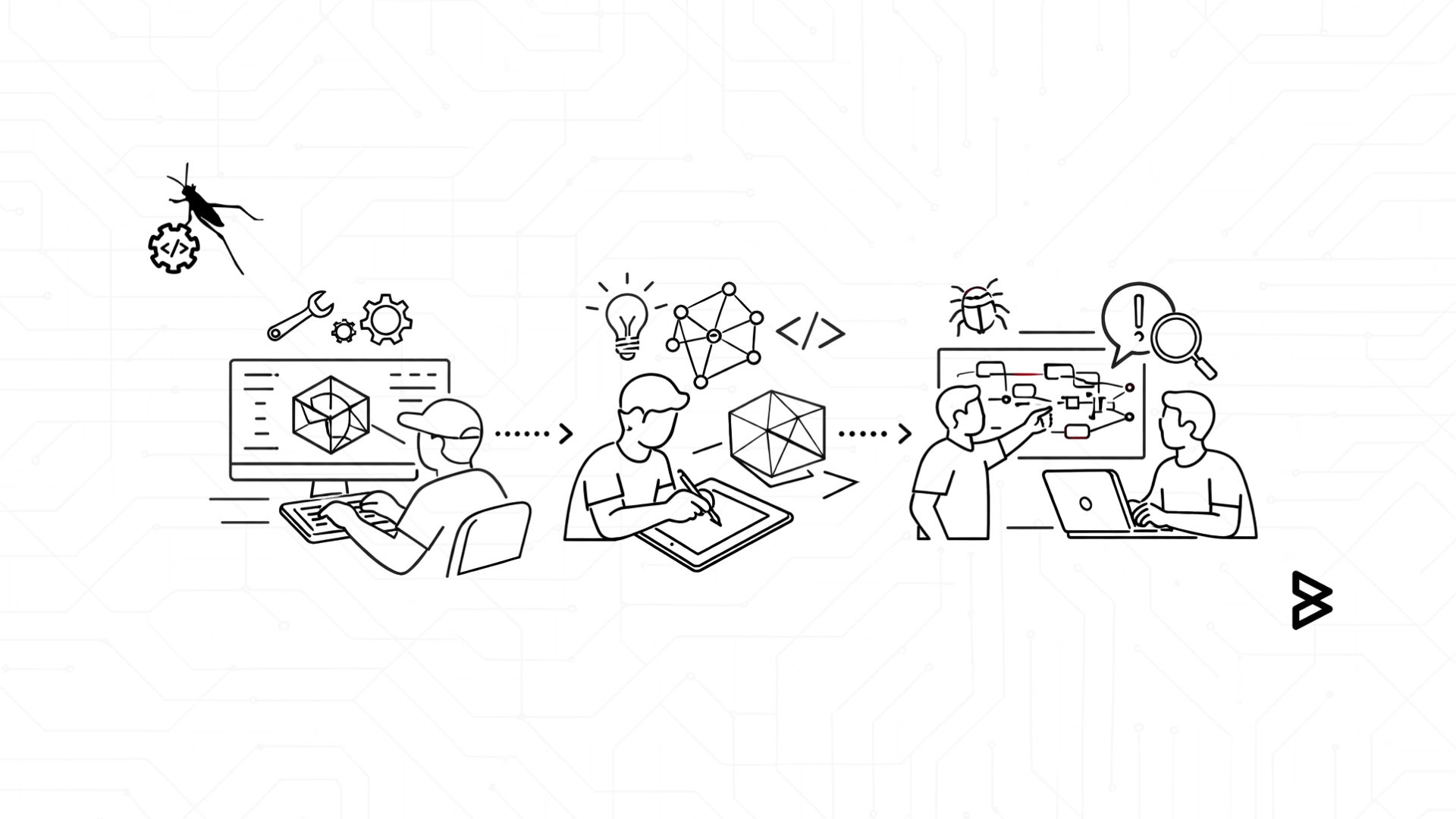
The 3 Stages of a Grasshopper User (And How People Actually Master It)
Grasshopper is a funny tool. From the outside it looks like visual programming for geometry. From the inside it’s closer to learning a new way of thinking.
If you’ve spent enough time in architecture, computational design, or digital fabrication circles, you eventually notice that Grasshopper users fall into rough “stages”. Not in a rigid hierarchy, but in how they approach problems, collaboration, and troubleshooting.
This isn’t about skill levels. It’s about mindsets.
Stage 1: Using and Tweaking What Already Exists

Most Grasshopper journeys start with someone else’s definition.
You download a file, plug in your geometry, tweak a slider, maybe add a component or two. You don’t fully understand the data trees yet, but you know how to tweak inputs to get output.
This stage is underrated. It’s how most people learn. You get a feel for:
• What components tend to cluster together
• How data flows through the canvas
• Which plugins solve what problems
• What breaks when you change inputs
Stage 2: Creating New Definitions From Scratch

Soon you will need to start editing, and later on implementing new functionality..
This is where Grasshopper stops feeling like a tool and starts feeling like a language. You learn how to:
• Deconstruct the intent of a design
• Rebuild logic from first principles
• Structure definitions so they’re legible
• Think in data trees instead of layers
• Develop your own preferred workflows
Your relationship with geometry changes here. Instead of moving points manually, you start telling geometry how to behave.
This is what people mean when they say “parametric thinking”. It is about expressing design intent in rules instead of shapes.
Stage 3: Troubleshooting, Collaborating, and Pre-Empting Issues
The third stage is the least glamorous and the most powerful.
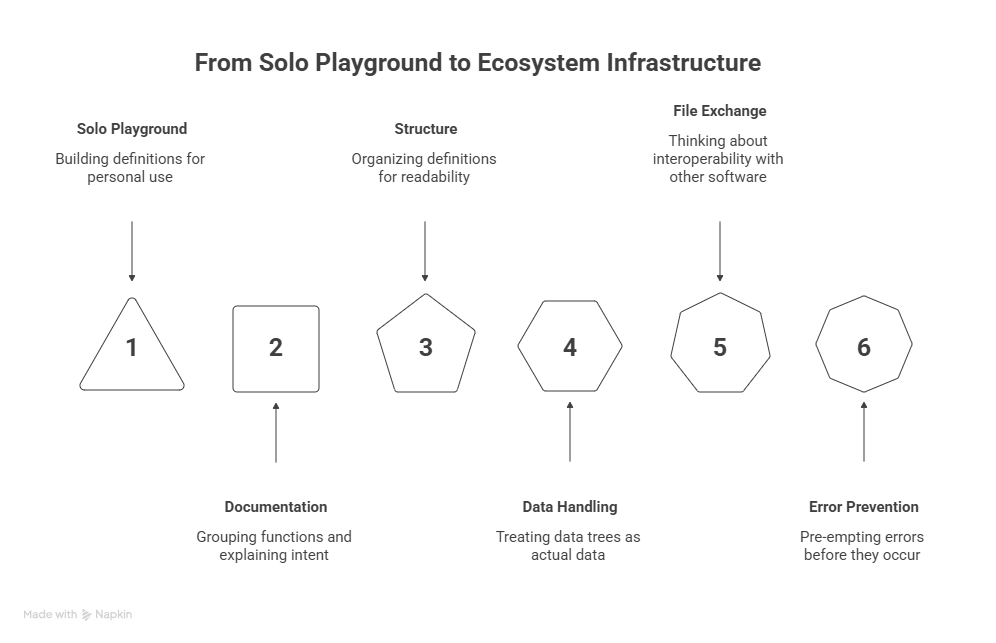
It’s when you stop building definitions for yourself, and you start building them for teams, fabricators, downstream workflows, and future you. This is where Grasshopper becomes part of a larger ecosystem instead of a solo playground.
You know someone has reached Stage 3 when they:
• Document their definitions sensibly by grouping to separate functions
• Use Scribbles to explain intent
• Structure definitions so others can read them
• Treat data trees like actual data, not magical wires
• Think about file exchange with Revit, Rhino, Tekla, or CAM
• Pre-empt errors before they blow up the pipeline
• Debug calmly because they’ve seen it all before
At Stage 3, the job is less about making geometry and more about making geometry usable.
You’re not just asking “does this work”
You’re asking “does this survive fabrication”, “does it coordinate with BIM”, “can someone else maintain this”, “can we automate the boring parts”, “does it break when inputs change”
That’s the point where Grasshopper stops being a scene graph and becomes infrastructure.
So How Does Someone “Master” Grasshopper?
The punchline is that mastery isn’t sliders or plugins or knowing every component.
Real mastery looks more like:
• Thinking parametrically instead of procedurally
• Structuring logic clearly instead of hacking it together
• Solving the same problem simpler than last month
• Explaining your reasoning to someone else without ego
• Building systems that do not collapse when input changes
• Seeing downstream effects (BIM, CAM, fabrication, install)
• Being able to debug without nuking the definition
Grasshopper mastery is quiet. It doesn’t announce itself. It shows up when the fabrication contractor says “this is clean”, when the BIM coordinator thanks you for consistent data, when the intern understands your canvas without a 2 hour explanation.
The irony is that the more you master Grasshopper, the less you obsess about Grasshopper itself. You start thinking about the pipeline, the handoffs, the manufacturability, the behavior.
Final Thought
Grasshopper’s learning curve looks intimidating from the outside, but from the inside it’s just a progression from tweaking, to building, to collaborating, to pre–empting. The ones who “master” it are rarely the ones with the flashiest Instagram renders. They’re the ones who have smooth workflows and definitions that you can understand when you get back to them, or that you can describe for someone else.
That’s where the craft lives.
This is the world we operate in every day at Borg Markkula. Computational design, fabrication-aware workflows, Grasshopper logic that survives handoff and construction. If that’s your space too, we should talk, click to start your journey!